Redis Caching Strategies for High-Performance Applications
Master Redis caching patterns — from simple key-value caching to advanced strategies like cache-aside, write-through, and cache stampede prevention.
Redis is the Swiss Army knife of backend engineering. At its core it’s a blazing-fast in-memory data store, but the real power is in how you design your caching strategy. Let’s explore the patterns that matter.
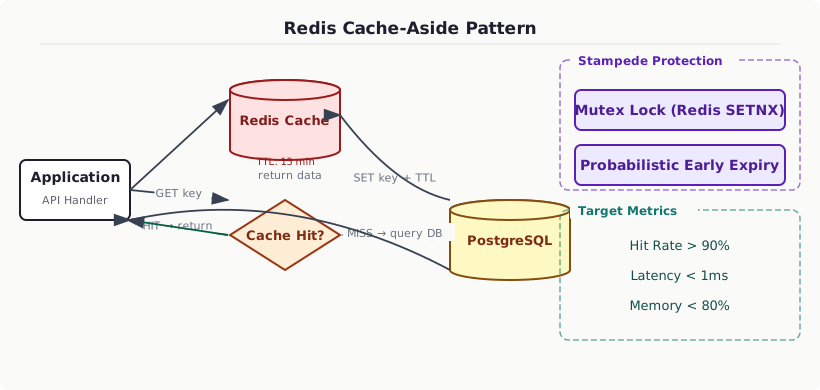
Why Cache?
Simple math: a database query might take 50ms. A Redis hit takes 0.1ms. That’s a 500x speedup. For endpoints that serve millions of requests, caching is not optional — it’s survival.
Caching Patterns
1. Cache-Aside (Lazy Loading)
The application manages the cache. Most common pattern.
Pros: Only caches what’s actually requested. Tolerates cache failures. Cons: First request always hits the database (cold start).
2. Write-Through
Update cache whenever you update the database.
Pros: Cache is always up-to-date. Cons: Write penalty; you cache data that might never be read.
3. Write-Behind (Write-Back)
Write to cache immediately, persist to database asynchronously.
Pros: Extremely fast writes. Cons: Risk of data loss if Redis goes down before persisting.
Cache Invalidation Strategies
“There are only two hard things in Computer Science: cache invalidation and naming things.” — Phil Karlton
TTL-Based Invalidation
Simplest approach. Set an expiry and let it expire naturally:
Event-Based Invalidation
Invalidate on data change:
Tag-Based Invalidation
Group related cache keys with tags for bulk invalidation:
Cache Stampede Prevention
When a hot cache key expires, hundreds of requests simultaneously hit the database. This is a cache stampede and can take down your service.
Solution: Probabilistic Early Expiration
Solution: Mutex/Lock
Only one goroutine recomputes; others wait:
Key Design Best Practices
Monitoring Cache Health
Track these metrics:
A cache hit rate below 80% means your caching strategy needs work. Start there.