Load Balancing Techniques: Algorithms and Real-World Patterns
A comprehensive guide to load balancing algorithms, Layer 4 vs Layer 7, session affinity, health checks, and when to use each approach.
Load balancing is how you turn one server into many — distributing traffic to achieve high availability and horizontal scalability. Understanding the algorithms and patterns helps you design systems that stay up when individual components fail.
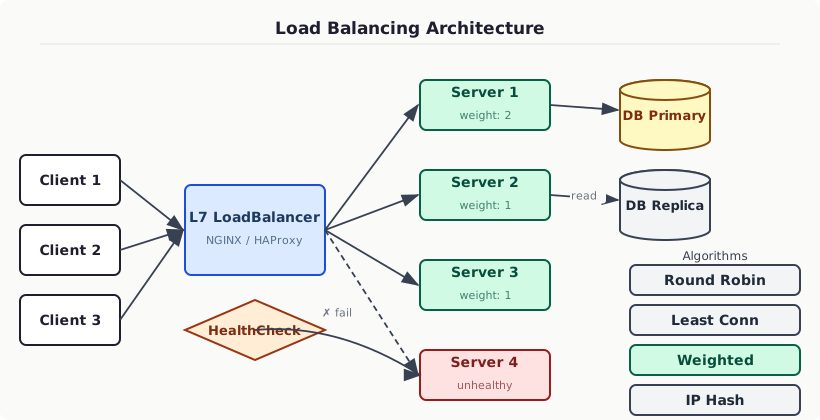
Layer 4 vs Layer 7 Load Balancing
Layer 4 (Transport Layer)
Routes based on IP and TCP/UDP port. Doesn’t inspect content. Ultra-fast.
Use cases: TCP/UDP traffic, when raw performance is critical, database proxies (e.g., HAProxy for PostgreSQL).
Layer 7 (Application Layer)
Routes based on HTTP content — headers, cookies, URL path, body. More intelligent but more overhead.
Use cases: HTTP APIs, content-based routing, SSL termination, A/B testing.
Load Balancing Algorithms
Round Robin
Distribute requests sequentially to each server in rotation.
Best for: Homogeneous servers, stateless requests with similar processing time.
Weighted Round Robin
Like round robin but respects server capacity:
Best for: Mixed-capacity servers, gradual canary deployments (route 5% to new version).
Least Connections
Route each new request to the server with the fewest active connections.
Best for: Long-lived connections (WebSockets), variable-duration requests.
Least Response Time
Routes to the server with the lowest combination of response time and active connections. The smartest basic algorithm.
IP Hash (Sticky Sessions without Cookies)
Hash the client’s IP to always route them to the same server:
Problem: Uneven distribution if many users share an IP (corporate NAT). Not ideal for large fleets.
Consistent Hashing
Used heavily in distributed caches (Redis Cluster, Memcached). Adding/removing nodes only remaps a fraction of keys.
Best for: Distributed caches, content delivery, session stores.
Session Affinity (Sticky Sessions)
Some applications store state in memory (session data, in-memory caches). Sticky sessions ensure a user always hits the same server.
Cookie-Based Stickiness
The load balancer inserts a cookie identifying which backend served the user.
Warning: Sticky sessions undermine horizontal scaling. If a server dies, those users lose session. Prefer stateless services — store sessions in Redis instead.
Health Checks
A load balancer is useless if it routes to dead servers. Always configure health checks:
Passive Health Checks
Mark a server unhealthy based on failed responses:
Active Health Checks
Periodically probe servers:
Your /health endpoint should check:
- Database connectivity
- Cache connectivity
- Disk space
- Return 200 only if all critical dependencies are healthy
NGINX Configuration Example
Global Load Balancing with DNS
For multi-region deployments, use DNS-based load balancing:
AWS Route 53, Cloudflare, and GCP Cloud DNS support latency-based routing (route to closest region) and health-check-based failover.
Load Balancing Decisions Cheatsheet
| Scenario | Algorithm |
|---|---|
| Identical servers, short requests | Round Robin |
| Mixed server capacities | Weighted Round Robin |
| Long-lived connections | Least Connections |
| General HTTP API | Least Response Time |
| Distributed cache | Consistent Hashing |
| Canary deployment | Weighted (5% new, 95% old) |
| WebSocket connections | Least Connections + sticky |
The best load balancer is the one you can reason about and operate. Start simple (round robin or least connections), add complexity only when you can measure the improvement.