gRPC vs REST: The Complete Comparison for Backend Engineers
A deep-dive comparison of gRPC and REST — performance, tooling, use cases, and when to pick each.
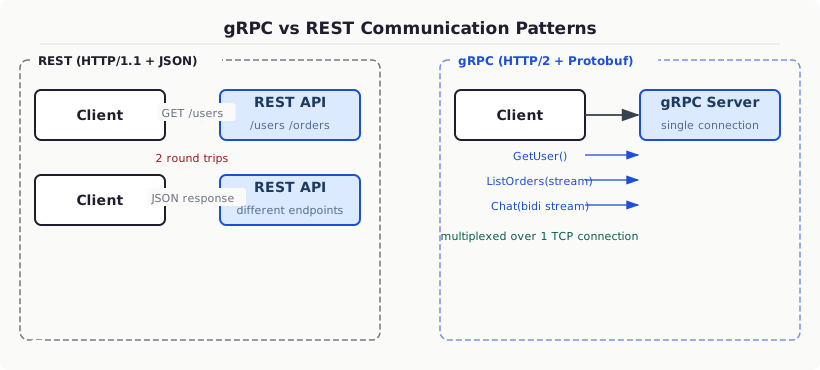
gRPC has been gaining serious traction in the microservices world. Built on HTTP/2 and Protocol Buffers, it promises better performance and stronger contracts than REST. But should you switch? Let’s compare honestly.
What is gRPC?
gRPC (Google Remote Procedure Call) uses:
- HTTP/2 — multiplexing, header compression, bidirectional streaming
- Protocol Buffers — binary serialization format (smaller, faster than JSON)
- Code generation — client and server stubs generated from
.protofiles
Generate code:
You get type-safe client and server code in any supported language.
Performance: gRPC Wins Clearly
| Metric | REST/JSON | gRPC/Protobuf |
|---|---|---|
| Payload size | ~baseline | 40-60% smaller |
| Serialization speed | ~baseline | 5-10x faster |
| HTTP version | HTTP/1.1 | HTTP/2 |
| Multiplexing | No (1 req/connection) | Yes |
| Header compression | No | Yes (HPACK) |
For high-throughput service-to-service communication, these differences are significant.
The Streaming Advantage
gRPC has four communication patterns:
1. Unary (same as REST)
2. Server Streaming
3. Client Streaming
Client sends a stream of messages; server responds once. Good for bulk uploads.
4. Bidirectional Streaming
Both sides stream simultaneously. Great for chat, real-time collaboration.
Developer Experience: REST Wins
gRPC has real friction points:
Browser Support is Limited
gRPC requires HTTP/2 trailers which browsers don’t natively support. You need gRPC-Web with an Envoy/NGINX proxy, which adds complexity.
Debugging is Harder
With REST, you curl and see JSON. With gRPC, you need tools like grpcurl or Postman gRPC:
Less Universal Tooling
REST has Swagger/OpenAPI, Postman, thousands of tutorials. gRPC tooling is catching up but isn’t there yet.
Go Implementation Example
When to Use gRPC
Choose gRPC when:
- Internal service-to-service communication (microservices)
- Performance is critical and payload size matters
- You need streaming (server, client, or bidirectional)
- Polyglot environment (auto-generated clients in Go, Java, Python, etc.)
- Strong contract enforcement is a priority
Choose REST when:
- Public-facing APIs (browser/mobile clients)
- Team unfamiliarity with gRPC
- You need human-readable payloads for debugging
- Simple CRUD without complex streaming needs
- Third-party integration (most support REST)
The Hybrid Approach
Many organizations use both:
The API Gateway translates HTTP/JSON to gRPC internally. You get the ergonomics of REST externally and the performance of gRPC internally. This is the approach Google, Netflix, and many large-scale companies use.
Bottom Line
gRPC is genuinely better for internal microservice communication — better performance, stronger contracts, great streaming support. REST remains the right choice for public APIs. Pick based on your actual use case, not trend-chasing.